Showing posts with label Bernstein. Show all posts

Friday, April 29, 2022

Flying the Flags for Ukraine & South Bay Chamber Music


REVIEW

Ukraine Benefit Concert, Temple Israel, Long Beach
South Bay Chamber Music Society, Los Angeles Harbor College
DAVID J BROWN

Cécilia Tsan.
Two cello/piano recitals were given last weekend in the South Bay area, and a joint review of both seems appropriate as each included the same single genre piece by one composer, while between them the two events encompassed another composer’s complete output in that same genre.

More importantly, however, the second concert, hosted by Temple Israel, Long Beach, was specifically organized by the cellist Cécilia Tsan as a fundraiser for Ukraine, and opened with a somber account of the Ukrainian national anthem. The donations website remains open, and can be accessed by clicking here or on the flag above. 

Timothy Durkovic
The work common to both recitals was Debussy’s Sonate pour Violoncelle et Piano, L144, and the performance by Ms. Tsan and Timothy Durkovic (piano) which formed the climax of their benefit concert was as passionately heartfelt as was her introduction to the event. The implacable determination of the Sostenuto e molto risoluto marking which heralds the sonata's Prologue was as fully realized by the players as was the capricious spontaneity of the succeeding Sérénade and linked Finale, where they negotiated all the quasi-improvisatory twists and turns of Debussy’s score with seeming effortlessness.

Claude Debussy.
This marvelous performance slightly put in the shade the very fine account of the same work that, two evenings before, had ended the first half of the South Bay Chamber Music Society’s last concert in its 2021-22 season, by Eric Byers (cello) and Steven Vanhauwaert (piano) in LA Harbor College’s concert hall. Listening to the sonata in both of these fine acoustics, it was impossible not to reflect on Debussy’s situation as he wrote it in 1915—a French patriot tormented by the war’s impact on his country, and already ill with the cancer that would kill him less than three years later amidst the German bombardment of his beloved Paris.

Eric Byers.
If (to grossly over-simplify) Ms. Tsan dwelt on the emotionally expressive aspects of Debussy’s cello writing, Mr. Byers seemed rather to relish its timbral resourcefulness—an impression perhaps enhanced by the fact that his and Mr. Vanhauwaert's performance immediately followed their account of the Three Meditations from Leonard Bernstein’s Mass, the huge “theater piece for singers, players and dancers” that he composed for the inauguration of Washington D.C.’s Kennedy Center in 1971.

The original production of Mass at the Kennedy Center.


Critically castigated at the time, Mass came in from the cold when it was revived during the 2018 Bernstein centenary, in particular through an acclaimed new complete recording under Marin Alsop. Though Bernstein's voluble religious questionings remain for some listeners one of the less relatable aspects of his art, these Meditations, arranged for cello and piano from the orchestral originals that form the 12th, 17th, and 25th sections of the complete Mass, certainly form a way into at least one aspect of the work.

Steven Vanhauwaert.
I have doubts that the resulting triptych adds up to a coherent whole, but Byers and Vanhauwaert were clearly committed to the Three Meditations, sparing nothing of the cello line’s fractured, angular intensity, punctuated by thunderous piano dissonances, pizzicati so intense that the strings thwacked off the cello’s fingerboard and, to open and close the last Meditation, rhythmic taps from Mr. Vanhauwaert's fingers on the piano structure to simulate the sound of bongos.

Robert Schumann.
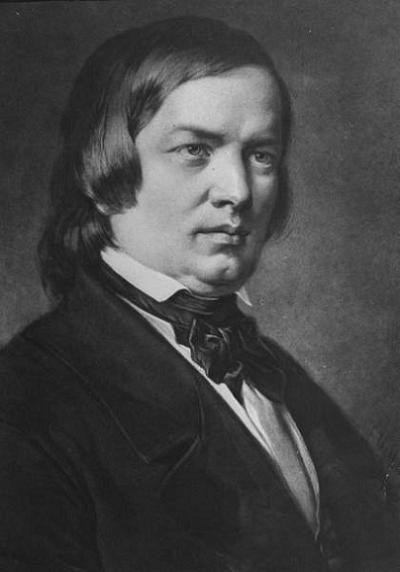
No contrast could have been greater than the preceding item, an account of the Adagio and Allegro, Op. 70, by Schumann, as forthrightly intense in the Adagio as the Allegro was fleet. Before that, their recital had opened with the gently mournful Two Pieces composed by the 15-year-old Anton Webern in 1899, his earliest work to have survived and a universe away expressively from his atonal and hyper-aphoristic Drei Kleine Stücke Op. 11 (1914)—a skillful piece of programming by Byers and Vanhauwaert to open their second half.

Anton Webern.
The three pieces contain a mere 9, 13, and 10 measures respectively and are all over in under two minutes, but the score is deluged with detailed markings—more indications as to timbre, dynamic, expression, attack, etc., than there are actual notes—and the players’ performance was a minor miracle of attentiveness to all these.

Gabriel Fauré, by
John Singer Sargent.
The first work programmed in Tsan's and Durkovic’s benefit concert, Fauré’s Élégie Op. 24, maintained the mood of grieving. Mr. Durkovic’s clear articulation of the repeated C minor chords that led into the main theme on the cello were a welcome corrective to some more histrionic and soulful interpretations, while the contrast was literally breathtaking between Ms. Tsan’s first forte statement of that theme and the mere thread of tone, virtually without vibrato, with which she articulated its immediate pianissimo restatement.

The two recitals joined hands again with the inclusion by Byers and Vanhauwaert in their SBCMS recital of Brahms’ Cello Sonata No. 2 in F major, Op. 99 of 1886 and—as the centerpiece of their Ukraine fundraiser—Tsan's and Durkovic's performance of his Cello Sonata No. 1 in E minor, Op. 38, of which Brahms wrote the first two movements in 1862 (plus an Adagio which he later discarded) and then the Allegro finale three years later. 

Johannes Brahms in 1889, 
three years after the composition
of his Cello Sonata No. 2.
Tsan's and Durkovic’s account avoided the pitfall of overdoing the non troppo aspect of the first sonata’s initial Allegro non troppo marking. In some performances this, together with the inclusion of the long exposition repeat, can make the first movement seem interminable, but their forward-pressing performance was rich and elegiac rather than doomily dragging, and with the omission of that repeat made the first movement more equal in scale with its two successors.

Equally well caught were the bittersweet courtliness of the Menuetto and Trio, and their immaculate ensemble in the Allegro finale’s torrential contrapuntal writing made for some edge-of-seat listening as the movement swept to its dark conclusion.

After the Debussy sonata, the brief Largo third movement of Chopin’s Cello Sonata in G minor Op. 65 made a touching encore and exeunt to this memorable hour of music-making in the best of causes, which so far has raised almost $15,000 for victims of the Ukraine war.

Finally, back to Byers' and Vanhauwert's South Bay Chamber Music Society recital. In complete contrast to the minor-key homogeneity of Brahms’ first cello sonata, his second sonata is far more varied in mood and texturally adventurous, with much use of cello pizzicato and tremolando effects on both instruments.

Performing the work as their final item, Byers and Vanhauwert were equally masters of the first movement’s wide-ranging drama (complete with exposition repeat), the tender processional of the Adagio affetuoso, the scherzo’s impulsive, improvisatory character, and the concise, exuberant finale. It would be difficult to imagine a finer conclusion to the SBCMS's first post-Covid season. 

 ---ooo---

Ukraine Benefit Concert, Temple Israel, Long Beach, Sunday, April 24, 2022,
3:00 p.m.
South Bay Chamber Music Society, LA Harbor College, Friday, April 22, 2022, 8:00 p.m. (repeated at the Pacific Unitarian Church, Rancho Palos Verdes, Sunday, April 24, 2022, 3:00 p.m.)

Images: Cécilia Tsan: Courtesy LA Phil; Timothy Durkovic: artist website; Debussy: Piano Street; Eric Byers: artist website; Steven Vanhauwaert: artist website; Schumann, Webern, Fauré, Brahms: Wikimedia Commons.

If you found this review to be useful, interesting, or informative, please feel free to Buy Me A Coffee!

Friday, October 1, 2021

Expanding the Cello Quintet Repertoire


Sakura Cello Quintet: l-r Peter Myers, Stella Cho, Benjamin Lash, Michael Kaufman, Yoshida Masuka (in this performance Ben Solomonow stood in for Mr. Masuka).


REVIEW

Sakura Cello Quintet, South Bay Chamber Music Society, Los Angeles Harbor College
DAVID J BROWN

But, you may well ask, what cello quintet repertoire? Opening its 2021-2022 season, the SBCMS's first live concert with audience for more than a year-and-a-half might at first glance have seemed a lightweight affair, a toe in the water or dip in the shallow end, if you will— fairly short in total duration and entirely comprising arrangements of brief pieces, some well-known and some less so.

Ben Solomonow.
However, in a program for an unfamiliar, even unlikely, instrumental line-up, played by an ensemble fresh I think to the SBCMS performers' roster, the Sakura Cello Quintet (Peter Myers, Stella Cho, Benjamin Lash, and Michael Kaufman, with Ben Solomonow standing in for the unavoidably absent Yushida Masuka) so skillfully reworked vocal and instrumental works ranging from the early 17th to the late 20th centuries that it could fairly be taken to signal a notable expansion of works available to this medium of five cellos—as indeed may be confirmed by the group's own website.

They opened with a group of four Renaissance items, three Tudor and one Spanish, and in the intimate but rich acoustic of LA Harbor College's Music Room, the cellos' wide timbral spectrum imparted an organ-like depth and breadth to the stately harmonies of Orlando Gibbons' a cappella motet The Silver Swan, in an unattributed arrangement. The pace picked up with John Dowland's M. George Whitehead his Almand, and grew yet more sprightly in his The Earle of Essex Galliard, both from Dowland's great set of five-part instrumental pieces entitled Lachrimæ, published in 1604.

Carlo Gesualdo.
But an almost shocking corrective to this amiable courtliness came with the tortuous harmonies and whiplash pace and mood switches of Gesualdo's madrigal Moro, Lasso, al mio duolo (I die, alas, in my suffering). On five cellos this was no less expressive of grief (and, perhaps, guilt, as Sakura member Peter Myers implied in his brief introductory reference to Gesualdo's murder in 1590 of his wife and her lover) than as sung in the original, published in Gesualdo's sixth book of madrigals in 1611.

One can hardly imagine a starker change of style and content than the Ritual Fire Dance from Falla's ballet El amor brujo (Love the magician), arranged by Mr. Myers. The opening tremolando buzz on lower strings from the orchestral original translated perfectly, as one might have expected, to four cellos; what was more surprising was how effective the ensuing insidious oboe tune sounded in the husky high treble of the remaining instrument. 

Brahms (l) and Joachim (r).
So far, so effective, but I did feel some expressive loss in Mr. Myers' arrangement of Rachmaninoff's Vocalise, though that may have been due to the performance's diminution of the dynamic range familiar from Rachmaninoff's own version for voice and orchestra. As for the scherzo that Brahms contributed to the portmanteau F-A-E Violin Sonata composed in 1853 for Joseph Joachim (will we ever get a chance to hear the complete work, with Albert Dietrich's fine first movement as well as Brahms' scherzo and Schumann's intermezzo and finale?), Brahms might have blinked a bit at the positively pachydermian gruffness of his opening theme transferred from violin/piano to five cellos—but then again, maybe he wouldn't...

This arrangement was by Sakura's Michael Kaufman, who was also responsible for the quite lovely version of Dvořák's Silent Woods, Op. 68 No. 5 that opened the concert's second half. Like the Vocalise this exists in many guises, much the most familiar being the one made by Dvořák himself for cello and small orchestra from his four-hands piano original. Without scores to hand it was impossible to be sure, but presumably Mr. Kaufman's arrangement reproduced pretty much Dvořák's solo cello part, in this performance democratically shared between the players.

Again a major change of pace came with Somewhere from West Side Story, the evanescent harmonies from which Bernstein's unforgettable melody is suspended being eloquently realized in the arrangement by Simon Parkin (not a Sakura member). Then smack in arrived Mambo, complete with the familiar shouts!

Chick Corea.
Perhaps the most surprising, and audacious, arrangement of all was that by Mr. Myers of Brahms' Intermezzo in E-flat major, the first of three written and published as his Op. 117 in 1892, five years before his death. Audacious, because the personal character of Brahms' late piano works has always seemed intimately, and inextricably, involved with the piano and its timbres. Well, five cellos enhanced, if anything, this piece's musing, prayerful quality—an addition indeed to their repertoire. I wonder whether the other Intermezzi would lend themselves as well?

Finally, there was Spain, by Chick Corea. To me, any intrinsic quality the piece had leant heavily on the fragments of Rodrigo's Concierto de Aranjuez adagio that form an introduction to what seemed an elaboration of generic Spanishisms—but then, jazz remains pretty much a closed book to me. Undeniably, though, Peter Myers' arrangement and Sakura's performance made the most of it, kicking off SBCMS's new season with panache and swirl. Welcome back! 

---ooo---

South Bay Chamber Music Society, Los Angeles Harbor College, 8pm, Friday, September 24, 2021.
Images: Sakura Cello Quintet: Artists' website; Ben Solomonow: laphil.com; Composers: Wikimedia Commons. 

If you found this review to be useful, interesting, or informative, please feel free to Buy Me A Coffee!

Friday, February 8, 2019

Slava!, Shostakovich, and Scheherazade at the PSO


Scheherazade and Sultan Shahryar, painted in 1880 by Ferdinand Keller (1842-1922).

REVIEW

Pacific Symphony Orchestra, Segerstrom Center for the Arts, Costa Mesa
DAVID J BROWN

Leonard Bernstein and Mstislav Rostropovich.
The Bernstein Centenary juggernaut may be departing, but its echoes are still around, as evinced by the PSO opening its most recent concert with Slava! A Political Overture (1977). Carl St. Clair directed this late, brief, orchestral explosion by his late mentor “Mr. B” with tons of energy, to which the band responded with equal enthusiasm—every growled trombone glissando and wah-wah trumpet wail relished.

Slava! was composed as a tribute to Mstislav Rostropovich on the latter’s becoming Music Director of the National Symphony Orchestra, and there didn’t seem much about it that could be called “political”, other than by association with its dedicatee’s fraught relationship with his homeland. However, it does draw themes from Bernstein’s White House musical 1600 Pennsylvania Avenue, and post-performance investigation found (good old YouTube!) that the work actually includes a brief collage of taped political slogans and cheers, so fair enough.

Perhaps, though, that should be “included”, as the only vocal sound I could detect in the PSO performance was the “Slava!” shouted by the orchestra at the work’s conclusion: the earlier “oompah” get-ready measures for those inserts had maybe seemed excessive because the sloganeering never arrived, or was too quiet to be noticed. Whatever, it’s a fun piece, though the raucousness fails to conceal that its themes are far less distinctive and varied than those of that wonderful other four-minute Bernstein overture, Candide.

Dmitri Shostakovich and Mstislav Rostropovich.
Clever program-planning maintained the Rostropovich connection through the choice of concerto to follow the Bernstein overture. The ‘cellist’s friendship with Dmitri Shostakovich dated from his wartime studies at the Moscow Conservatory where the composer was one of his teachers.

His rise to fame in the Soviet Union and elsewhere in eastern Europe was meteoric, and he was already long established as one of the Soviet Union’s most prominent soloists when Shostakovich wrote his Cello Concerto No. 1 in E-flat major Op. 107 for him in 1959 (a second concerto for him was to follow in 1966).

Leonard Elschenbroich.
Rostropovich’s commercial recordings and concert accounts show his interpretation to have been more tense and urgent than that of the young German ‘cellist Leonard Elschenbroich, making his Californian debut here. The brief first movement opens with, and proceeds to be dominated by, a four-note motif based on Shostakovich’s musical “signature” DSCH (D-Eb-C-B in German notation), but instead of the nervous, nagging effect in performances by the dedicatee, the more measured approach of Elschenbroich with the PSO under St. Clair brought a plaintive bleakness.

The movement’s later stages feature increasingly prominent interjections by a single French horn (the only brass instrument in the score), played here to minatory effect by principal hornist Keith Popejoy. The Moderato second movement, considerably slower in this performance than those predecessors, opens with a soft and melancholic string chorale, radiantly delivered by the PSO players, after which the horn threats erupt again.

The end of the movement, following one more horn interjection, devolves into one of those passages of suspended animation that Shostakovich made his own. Against a wandering, muted first violin line, the ‘cellist plays high harmonics against isolated celesta notes, like stars seen through night mist, before passing without a break into the unaccompanied Cadenza that forms the entire third movement. Mr. Elschenbroich’s concentrated account of this, delivered like the inward musings of a philosopher puzzling his way towards the solution of a conundrum, held the audience rapt until the brief fast finale burst in to relieve the tension. Despite some passing shaky ensemble between soloist and orchestra—understandable as this was his first performance with them, who in any case hadn’t played the concerto since 2006—this was a fine performance of a powerfully original, demanding, and enigmatic work.

Rimsky-Korsakov’s Symphonic Suite Scheherazade used to be as familiar a concert-hall staple as, say, any Brahms or Beethoven symphony, but in recent years it seems to have slipped a bit in frequency of appearance, though the PSO itself played it as recently as March 2017. Whatever, it was an unalloyed pleasure to re-encounter concert music’s most guileful seductress, particularly when her manifold charms were unfolded in such a glittering, sumptuous array as by the PSO and Maestro St. Clair.

If ever a work could be subtitled “concerto for orchestra” it is Scheherazade, and first amongst equals here was the violin of Concertmaster Dennis Kim who—after a very portentous account of the opening Sultan Shahryar motif on heavy brass, low woodwind, and full strings pesante, followed by spaciously separated woodwind chords in perfect unison—presented a heroine as alluring, tender, confiding, and passionate as anyone could desire.

The PSO under Carl St. Clair play Rimsky-Korsakov's Scheherazade, with
Dennis Kim (left foreground).

Later in the first movement Rimsky-Korsakov gives almost as much prominence to a solo ‘cello, here in the hands of Principal Timothy Landauer, representing the undulating motion of the waves that bear forward Sinbad’s Ship. I did feel in this first movement that Carl St. Clair slightly overdid the breadth at the expense of onward motion, though the orchestra’s generosity of phrasing, collectively and individually, was more than adequate to sustain it.

Rimsky-Korsakov by Ilya Repin (1893).
Overall, this was an exceptionally spacious performance, clocking in at some six minutes more than the program book’s admittedly optimistic estimate of 42, but in all three of the remaining movements there was no sense of dragging. In “The Tale of Prince Kalendar” the principal woodwinds become the stars of the show, and Maestro St. Clair gave the clarinet (Joseph Morris), bassoon (Rose Corrigan), oboe (Jessica Pearlman Fields) and flute (Benjamin Smolen) all the time in the world to luxuriate in their successive long moments in the sun.

In their turn, the strings eloquently sang out the great romantic melodies of “The Young Prince and the Princess”, with the burnished tone of the massed 'cellos being particularly notable when they took over the tune. Finally “The Festival at Bagdad” was a torrent of instrumental color, expertly terraced through its increasingly frenetic scurrying until Sinbad’s Ship hove at last back into view, the first movement's principal theme returning magisterially on the trombones before its destruction on the rocks, the tam-tam that crowns the cataclysm struck at just the right forte dynamic against the sfff, and fff elsewhere in the orchestra (just one example among hundreds in the score of Rimsky's extraordinarily detailed markings).

After this, Mr. Kim’s postlude was eloquently long-drawn, the book of “One Thousand and One Nights” slowly and lovingly closed to conclude a performance that more than equaled any that I can recall. For once, the standing ovation that southern Californian audiences seem compelled to give any performance, however workaday, was thoroughly deserved. 

---ooo---

Pacific Symphony Orchestra, Renée and Henry Segerstrom Concert Hall, Thursday, January 31, 2018, 8 p.m.
Images: Scheherazade: Courtesy WRTI; Bernstein and Rostropovich: Courtesy Alicia Storin website; Shostakovich and Rostropovich: Pinterest; The performers: Doug Gifford, courtesy Pacific Symphony Orchestra; Rimsky-Korsakov: Wikimedia Commons.

Wednesday, March 14, 2018

Southeast Symphony Celebrates Bernstein & Diversity

Southeast Symphony, Anthony Parnther, Music Director (at L.A.'s First Congregational Church)

REVIEW

Southeast Symphony in Bernstein at L.A.'s First Congregational Church
RODNEY PUNT

It was the Southeast Symphony’s turn last Sunday to celebrate protean American composer-conductor Leonard Bernstein, whose centennial birthday has spawned a year-long slate of local celebrations. Until that evening, however, the champagne had hardly bubbled trouble free. Two earlier uptown productions of his works proved at least as star-crossed as they were star-kissed.

LA Opera’s revival of Candide confirmed - once again - that its cardboard-caricatured parable is at best a succès d’estime, even with an imaginative staging by Francesca Zambello, solid vocals and fine pit-work by James Conlon’s orchestra. Likewise, the LA Phil’s rafter-rattling production of Mass, Bernstein’s paean to the turbulent 1960’s (and his middle-aged bid to connect with new audiences), though expertly handled by conductor Gustavo Dudamel, his orchestra and singers, seemed to lose dramatic focus along the way in Elkhanah Pulitzer’s over-busy staging.

If these two premiere organizations couldn’t fully bring off the banner-waving for America’s most famous musician, could that daunting task be accomplished by the venerable yet modestly funded Southeast Symphony? It turns out it could be, and it was, in the resonant space of First Congregational Church, the Gothic-styled cathedral near downtown Los Angeles.

In a program that had top-flight Bernstein bookending works by three other composers simpatico to his vision, the evening became more than a performance; it was an event to remember and savor, for itself and for what it represented to today's Los Angeles in all its busy, sprawling diversity.


Anthony Parnther
For the past eight years the Southeast Symphony's music director and conductor has been the charismatic, multi-talented Anthony R. Parnther (a fine bassoonist when not on the podium), whose family background is equal parts Jamaican and Samoan. His handling of the orchestra and singers throughout the evening kept rhythms crisp and colors bright in an acoustic environment that could easily have gobbled up both. Parnther’s witty introductions to the works were delivered in deep resonant tones that invoked actor James Earl Jones. In the First Congregational Church's cavernous acoustic, his narration sounded like the voice of God, but with a kindly wink.


Displacing Shakespeare’s Romeo and Juliet from Verona to the ethnically tense streets of New York City lent dramatic spine and relevance Bernstein’s now iconic West Side Story, and inspired some of its composer’s best lyrical outpourings. An orchestral medley of songs from the score (arranged by Jack Mason) opened the program, whetting the appetite for more Bernstein.

Conveying the stage drama of Candide has been problematic from its first performance and through several subsequent revisions (blame Voltaire’s wooden protagonists), yet two excerpts have been recognized from the beginning as top-flight Bernstein: the scintillating overture (often performed as a stand-alone piece) and the work's denouement, “Make our Garden Grow,” a vocal duet that urges humanity to remain hopeful and rise above calamities and cynicism. Concluding the program, the latter's fine performance by orchestra and chorus featured lilting solos by tenor Gustavo Hernández as the wised-up naïf, Candide, and soprano Golda Berkman as his chastened gold-digger wife, Cunegonde.

Between the evening's Bernstein were three other works, two by Americans and one by a Russian exemplar of the splashy colors and cross-cultural influences that characterize Bernstein’s own work.

Adrienne Albert
Adrienne Albert’s Western Suite is an appealing early work by the oft-performed Los Angeles-based composer. Her substantial Bernstein connection came in her early career as a singer and friend of the composer, collaborating with him on recordings of his Mass and West Side Story. (Before that, her collaboration with Igor Stravinsky included a vocal recording of the Russian composer’s very last song, The Owl and the Pussycat.) Albert’s Western Suite is an evocative, tuneful piece in the worthy tradition of Ferde Grofé’s Grand Canyon and Mississippi suites and the American ballets of Aaron Copland. It teems with impressionistic vistas: an oboe-led Western sunrise, a bustling pizzicato workday, some spiky hoedowns, and an exuberant apotheosis of peeling bells under a wide Western sky.


Florence Price
The piece that most surprised me - in fact it knocked my socks off - was a tone poem by American composer Florence Beatrice Price (1887-1953), the first African-American woman to have a symphonic piece performed by an American orchestra, when Frederick Stock and the Chicago Symphony Orchestra gave Price that distinction in 1933 with her Symphony in E Minor. This evening’s piece, The Oak, was a deeply mysterious tone poem that reminded one of Rachmaninov's spooky Isle of the Dead, or the more somber orchestral excerpts from Wagner’s Götterdämmerung. The work, never completed, was characterized by Parnther as “a torso.” If this is a torso, I want to hear more so.

Annelle Kazumi Gregory
Lending colorful benediction from an earlier century to the evening’s ethnic mash-up, Nikolai Rimsky-Korsakov’s evergreen Scheherazade reminded all concerned that exotic sounds from distant musical traditions were always, as they remain today, the spice of musical life. Providing a lovely musical simulation of the fabled heroine's spoken lines in The Thousand and One Nights was the evening’s musical Scheherazade, violinist Annelle Kazumi Gregory. A native of Southern California and a rising young soloist of mixed ethnic background (reportedly African-American and Japanese), she has already achieved distinction in a number of venues around town and abroad. Her solo outings here glistened like sinuous silver threads streaming their way in the vast interior space of the neo-Gothic church. This young artist has a bright future awaiting her.

Mention of Rimsky-Korsakov and Stravinsky in the same article reminds me that the former was teacher to the latter, and the latter was teacher-collaborator to featured composer Adrienne Albert in this evening's recital. The torch of musical tradition passes from one generation to the next. (For additional information on Rimsky’s influence on Stravinsky, see my review of the older Russian’s last opera.)

---ooo---

Celebrating this year its own seventieth season, the Southeast Symphony is an L.A.-based professional community orchestra closely associated with the city’s vibrant African-American musical life. The symphony’s complement of musicians more closely resembles multicultural Los Angeles than any other like ensemble I am aware of. A post-concert check of the orchestra’s ethnic make-up yielded this: Of the 73 musicians who performed on Sunday, 59 of them (that’s 80%) identified as either African-American, Latin-American, Native-American, Pacific Islander, Filipino-American, Asian-American or other non-European backgrounds. And that’s not counting the 13 African-American musicians who had to miss this performance because they had higher paying gigs elsewhere. (The latter conflict is, in fact, one to celebrate, not regret: these musicians are making real money in tinsel town's creative-artistic factory to the world.)

First Congregational Church is the oldest continually serving protestant church in Los Angeles, housing also the City’s largest pipe organ. Even more significant, its social outreach embraces the full diversity of the people of Los Angeles, making it an exemplar institution to bring the fractious city together and to lead the way to the embracing, inclusive society Los Angeles is becoming in this new century.

First Church’s association with the Southeast Symphony is a fortunate pairing of two great Los Angeles institutions with diversity in their DNA. But embracing multiculturalism wasn’t always the way of Los Angeles. Prior to my taking up pen and paper as a music critic a score of years ago, I served for a quarter century as Deputy Director of the City of Los Angeles Cultural Affairs Department (originally named “Municipal Arts”). One of my first experiences in that capacity, in the late 1970’s, was defending to the City Council’s Finance Committee the Department’s recommendations for grants to private arts organizations.

Here’s what I encountered one day: Two Councilmen on the three-member Finance Committee questioned our selections. (Both were from the then predominantly white San Fernando Valley, inclined to secede from the rest of the City.)  Councilman one declared: "Aman Folk Ensemble? What’s that? It sounds foreign. We don’t need to fund foreign stuff here. Denied.” Councilman two joined in: “Watts Symphony Orchestra? Are you kidding? Those people don’t even know what an orchestra is. Denied.”

True statements, I am ashamed for them to report. Fortunately, Mayor Tom Bradley, then in his first term, supported our original recommendations and kept the two grants in his budget. To their credit, the full City Council had the courage and heart to fund both of them. That’s where Los Angeles was, at least in part, some four decades ago. Since then we’ve come a long way.

The Southeast Symphony is one of the reasons we've come the distance, and it remains one of our continuing musical joys.

---ooo---

Photo credits: Southeast Symphony at top by Eugene Carbajal. Anthony Parnther by Konstantin Golovchinsky. Other photos are courtesy of Southeast Symphony.